catalonia: district-wide professional development
Educators know that global competency matters and are eager to prepare students for an increasingly interconnected world. The challenge is how to do that meaningfully, without adding yet another initiative to teachers’ already full plates.
Global Cities, Inc., a program of Bloomberg Philanthropies, offers customized professional learning experiences that help educators translate global competency from an abstract idea into concrete classroom practice. Instead of being something “extra,” Global Cities demonstrates how explicit global learning instruction can fit into whatever content, subject, and student age group teachers are already teaching.
This approach succeeds because it adapts well to different instructional cultures and styles, whether in the United States or overseas. Through collaborations around the world, Global Cities has learned that the strongest results for both teacher practice and student learning come from meeting educators and students where they are, considering local contexts for learning.
In a recent partnership with Spain’s Catalan Regional Ministry of Education, Global Cities delivered a two-day training tailored to the specific needs of local educators. Global Cities introduced educators to a research-backed tool, the Codebook for Global Student Learning Outcomes, and translated it into Catalan to ensure accessibility and cultural alignment.
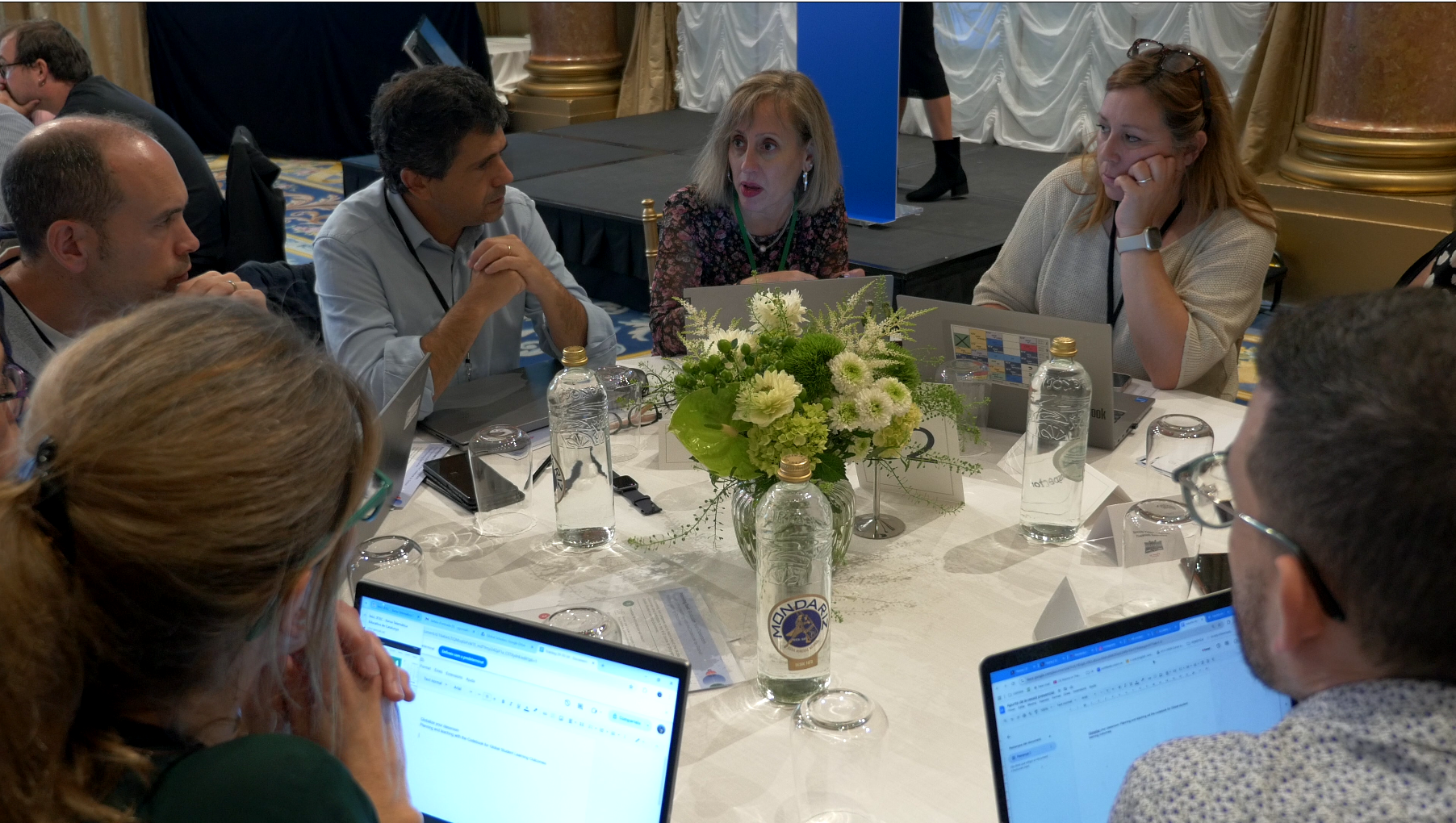
Teachers appreciated the Codebook as a guide to amplify the existing global connections in Catalonia’s curriculum. The Codebook helps educators define and identify the student actions, attitudes, and knowledge that demonstrate global competency, support the design of global competency-focused learning activities, and measure results in student work.
“[We] consider it to be a very useful instrument for our teachers and evaluators interested in incorporating classroom activities related to global competence,” said Monserrat Montegut, head of the Foreign and Heritage Languages Unit at the Department of Education in
Catalonia. She noted that the Codebook also helps teacher understand, “to what extent students demonstrate this competence.”
Catalonia’s unique inspector–teacher model added additional support for implementation. In Global Cities’ training, educators and inspectors worked together to develop a shared vision and a common understanding of global competency. They mapped where global outcomes fit into existing units, co-planned lessons, and calibrated expectations for student learning. Inspectors then provided ongoing support for teachers’ work by visiting classrooms, offering coaching, and helping schools align across grade levels and subjects.
In the months following the Global Cities training, teachers compiled portfolios with the materials and student work from the lessons they taught to capture how global learning came to life within their classrooms. These portfolios both documented progress and informed the next cycle of planning. As one inspector put it, the process created a “before and after” at the school level—teachers saw paths to integrate global learning and students began to understand how small actions can have impact across the world.
A participating 6th grade teacher shared how the workshop series evolved their perspective on global competence from a “complementary aspect” of learning to “an essential element for a meaningful and relevant education.” They continued, “I see more clearly how global competence connects with the curricular content of Catalonia. It has helped me to better integrate global perspectives in different areas, fostering students’ critical thinking and the ability to work in diverse contexts.”
The Catalonia model demonstrates how a customized Global Cities partnership can be adapted for your school system. If you are thinking of bringing global competency into your district, ask:
Where in our existing curricula might we enhance student learning by tying it to measurable global learning outcomes?
How could such a partnership be tailored to the unique contexts of our teachers and students?
What existing structures within our district could we leverage to drive impact?
Global Cities provides a clear tool that sets expectations for student outcomes, hands-on professional learning that aligns educator thinking with those outcomes, and guidance for ongoing coaching and reflection that make the work measurable and sustainable.
“I gained deeper understanding of how global competency aligns with my curriculum,” reflected one 4th grade teacher in Catalonia. “This requires teaching methods that encourage inquiry, collaboration, and discussions on global impact and solutions. My approach to teaching global competency has shifted from focusing primarily on content delivery to engaging students in discussions that connect local experiences to global trends.”
To learn more about how a Global Cities’ partnership can strengthen your teaching and learning, please visit our Contact page.